
Most contestants walk onto the America’s Got Talent stage prepared to demonstrate a difficult skill. Singers attempt powerful notes, dancers perform complicated choreography, and comedians deliver carefully written routines.
Andy Rowell chose silence.
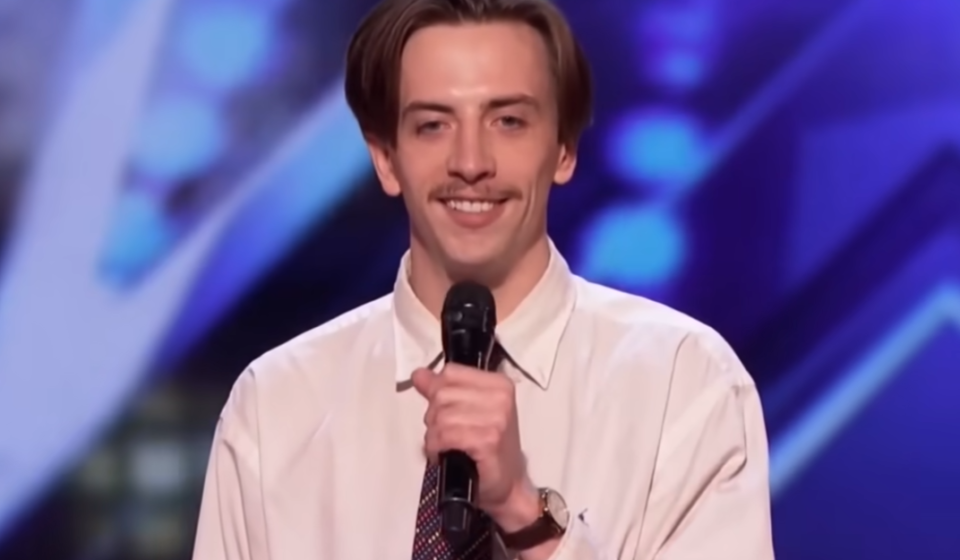
During his Season 14 audition in 2019, the comedian and karaoke enthusiast performed “Tequila,” the famous instrumental song by The Champs. Because the track contains only one recurring lyric, Rowell spent most of the performance standing beside a karaoke monitor and patiently waiting for the correct moments to speak.
The concept sounded almost too simple for a major television competition. However, Rowell’s serious expression, precise timing and refusal to break character turned the minimalist routine into an unexpectedly successful comedy act.
The Audience Slowly Realized the Joke
At first, Rowell’s performance appeared awkward.
The instrumental music played while he remained almost completely still, holding the microphone and watching the karaoke screen. Instead of trying to fill the silence with dancing or conversation, he allowed the long pauses to become the central part of the routine.
Then the vocal cue arrived.
Rowell delivered the title word with confidence before immediately returning to his motionless position.
The audience quickly understood what was happening. Every pause increased the anticipation, and every repetition produced a bigger reaction. By the end, people in the theater were dancing, cheering and participating in what had effectively become a giant karaoke performance. Reports from the audition noted that host Terry Crews also joined the fun from the side of the stage.
Simon Cowell’s Reaction Changed Completely
Simon Cowell is known for being highly critical of karaoke acts, and he initially appeared skeptical about Rowell’s audition.
That reaction did not last.
As the joke developed, Cowell began laughing and applauding. Fellow judges Gabrielle Union, Julianne Hough and Howie Mandel also embraced the performance. All four judges eventually voted yes, sending Rowell into the Judge Cuts round.
Their decision showed that Rowell was not being judged as a traditional vocalist. The performance succeeded as comedy because he understood how to control the audience’s expectations.
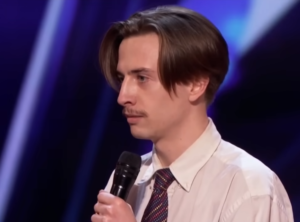
The audience knew the next word was coming. They simply did not know exactly how Rowell would deliver it or how seriously he would continue treating the absurd situation.
The Routine Had Already Become an Online Hit
Rowell’s idea had attracted attention before his America’s Got Talent appearance.
TIME reported that he was a comedian and karaoke enthusiast whose earlier version of the routine had already become popular online. His television audition allowed him to recreate the concept for a much larger audience.
Instead of expanding the routine with elaborate production, Rowell preserved the qualities that had made it funny in the first place.
There were no backup dancers or dramatic visual effects. The equipment consisted mainly of a microphone, a karaoke monitor and a larger screen displaying the song title.
The simplicity helped viewers understand the joke immediately.
Why the Performance Worked
Rowell’s act demonstrated that comic timing is not only about speaking at the correct moment. It is also about knowing when to remain silent.
Every instrumental section gave the audience time to anticipate the next lyric. Rowell’s expression suggested that he considered the performance completely serious, which made the situation even more ridiculous.
His confidence was another important factor.
A nervous performer might have rushed the routine, laughed at the audience’s reaction or tried to explain the joke. Rowell did none of those things. He trusted the concept and committed to it from beginning to end.
That commitment helped transform an act involving almost no singing into one of the season’s most memorable comedy auditions.
Four Yes Votes, but a Difficult Second Performance
Rowell advanced to the Judge Cuts, where country musician Brad Paisley appeared as a guest judge. However, the follow-up karaoke concept did not create the same surprise as the original audition. Entertainment Tonight reported that the joke was less successful the second time, particularly because Paisley had not seen the first performance and appeared confused by the act.
Rowell was eliminated during that round and did not advance to the live shows.
Although his competition journey was brief, the original audition continued circulating online. The Talent Recap upload has attracted millions of views, while other reposts and clips have also reached large audiences.
A Reminder That Entertainment Does Not Need to Be Complicated
Andy Rowell’s audition challenged the traditional meaning of a talent-show performance.
He did not demonstrate exceptional vocal range. He did not perform a physically dangerous stunt, and he did not rely on an emotional backstory.
Instead, he took a familiar song with almost no lyrics and used patience, confidence and deadpan humor to entertain an entire theater.
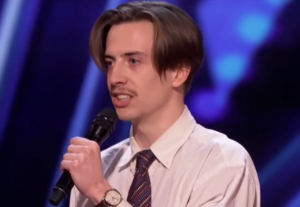
The performance became increasingly funny because Rowell never treated it as a joke. He approached every vocal cue as though it were the most important moment in a serious musical performance.
That contrast won over the audience and even persuaded Simon Cowell to vote yes.
Rowell’s “Tequila” audition remains a perfect example of how a simple idea can become unforgettable when the delivery is precise. He walked onto America’s Got Talent, waited through long stretches of instrumental music and spoke one recurring word at exactly the right moments.
Sometimes, that is all it takes to make the crowd go wild.